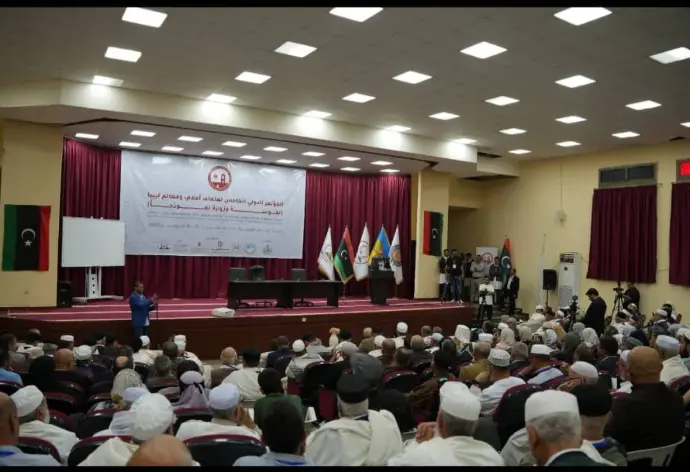
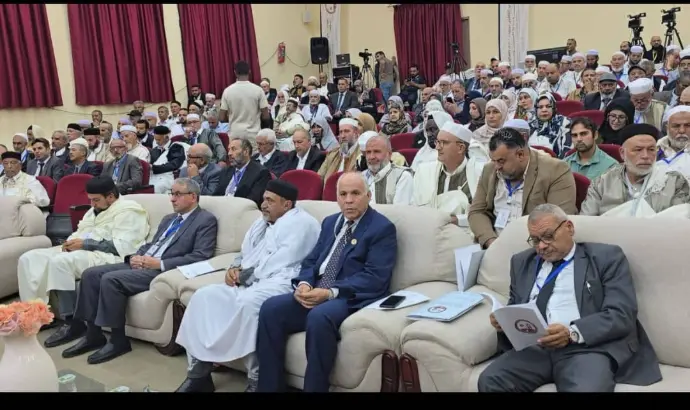
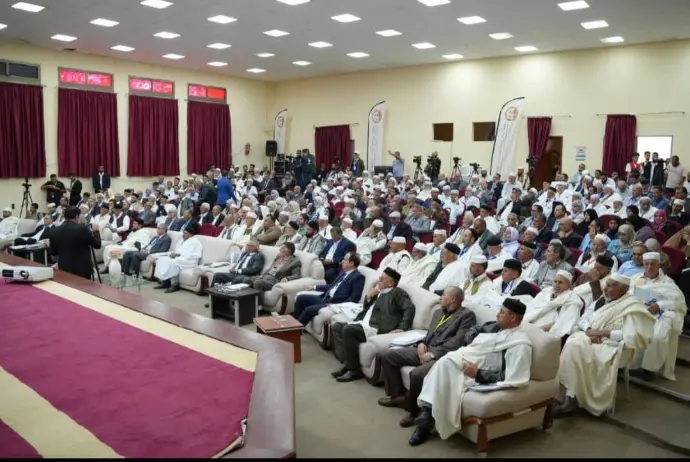
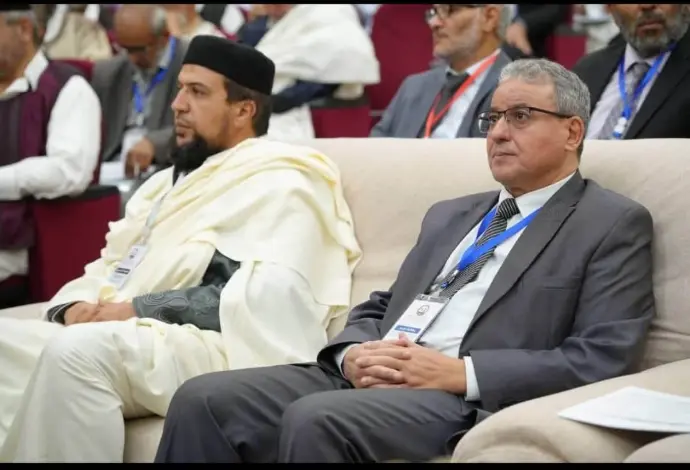
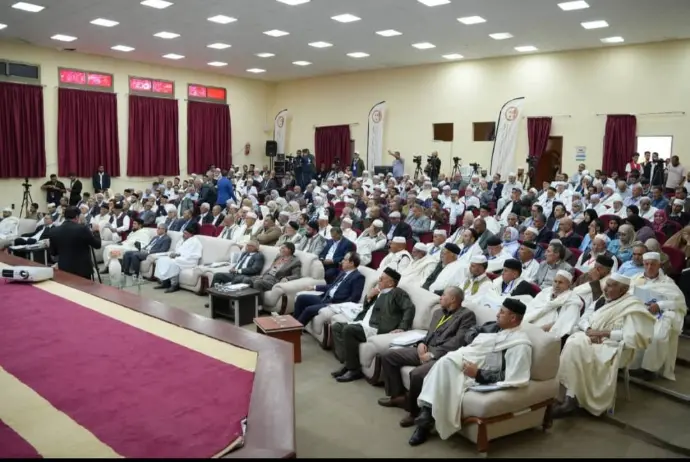
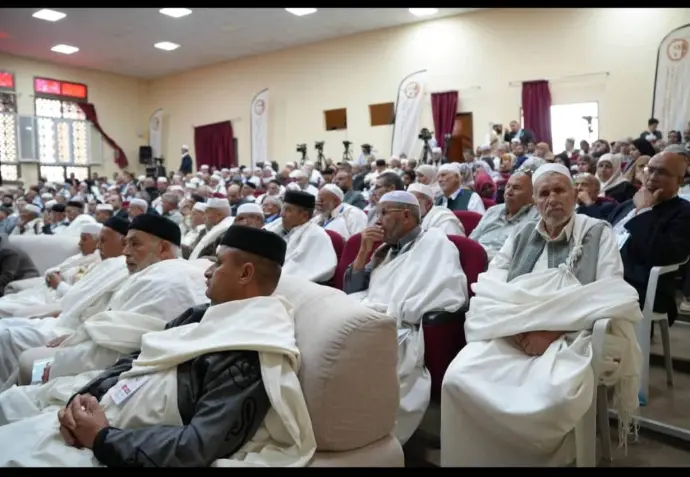
Professor Dr. Elyas Abubakr Al-Barouni participates in the proceedings of the Fifth International Scientific Conference of Scholars, Figures, and Landmarks of Libya. As part of the academic and scientific presence of Nalut University, Professor Dr. Elyas Abubakr Al-Barouni, Dean of the Faculty of Economics and Political Science at Nalut University, participated in the activities of the fifth international scientific conference, which commenced this morning, Sunday, at the auditorium of the Faculty of Education in Yafran, under the title: "Scholars, Figures, and Landmarks of Libya: A Model of Jebel Nafusa and Zuwara." The conference is organized in collaboration and partnership with the Municipality of Yafran, the Supreme Council of Ibadism in Libya, the Nafusa Social Communication Foundation, the Al-Istiqaama Foundation for the Quran and its Sciences in Nalut, and the Sheikh Amer Al-Shamakhi Center for the Quran and its Sciences in Yafran, along with a number of businessmen and local residents.The conference will witness the participation of 108 researchers, both male and female, attending in person and remotely, from Libyan and Arab universities and research centers, representing Libya, Tunisia, Algeria, the Kingdom of Morocco, the Sultanate of Oman, Qatar, Iraq, and the Hashemite Kingdom of Jordan, reflecting the scientific and cultural status of the region and the importance of documenting its heritage.ا الحضاري والفكري.
The conference will continue on Sunday and Monday, October 25 and 26, 2026, through five main research axes that highlight the scholars of Libya, its prominent figures, and its historical landmarks. It will document the architectural and economic heritage of the Nafusa Mountains and Zuwara regions, and showcase the intellectual and historical roles of the region's symbols, contributing to the enhancement of national identity and the strengthening of social and cultural ties between the mountains and the coast. This participation comes as a confirmation of the commitment of Nalut University and the Faculty of Economics and Political Science to support scientific and research activities, enhance academic communication between universities and research centers, and contribute to highlighting and preserving the Libyan cultural heritage for future generations. Caring for the history of Libya, its symbols, and its landmarks is not merely a recall of the past, but an investment in national awareness, a consolidation of identity, and the building of bridges of communication between generations.